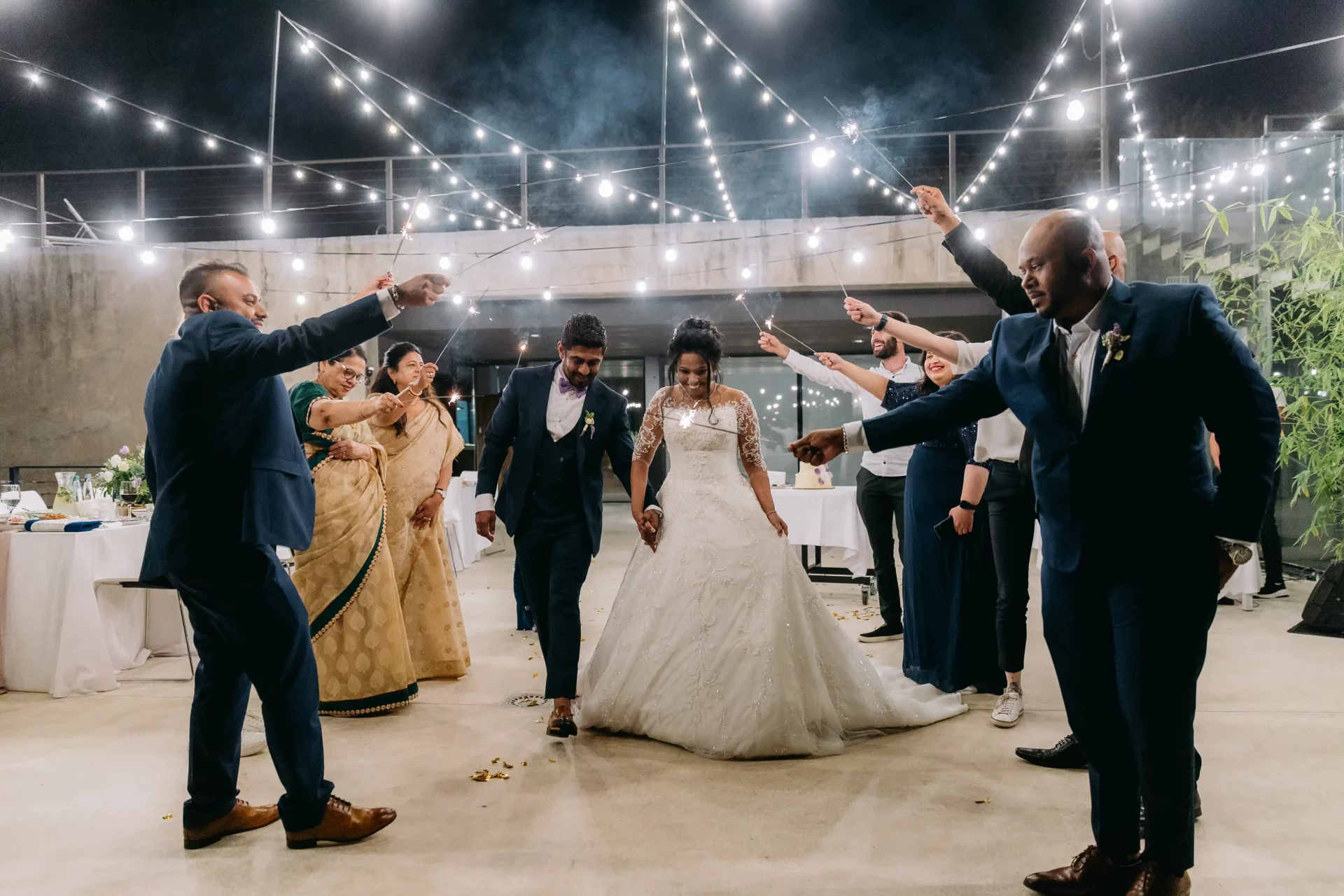



Recently, a couple came to us in which one partner was a citizen of an EU country and the other was a citizen of a non-EU country. To our surprise, they had a lot of concerns specifically because of the difference in their citizenship. They were convinced that, as in many European countries, they would need a large number of additional certificates and documents, and that the fact that one of them was an EU citizen while the other was not would make getting legally married in Georgia significantly more complicated.
That was when we realized that many couples in a similar situation still do not know how marriage registration in Georgia actually works. So, in this article, we have gathered everything you need to know in 2026 if one partner is an EU citizen and the other is not: requirements for the couple, necessary documents, the registration process, and how to obtain and subsequently legalize a Georgian marriage certificate for use abroad.



Why EU and non-EU citizens choose Georgia to register their marriage
Europe is known for its strict regulations, but when it comes to getting married to a non-EU partner, the European system can turn into a real bureaucratic maze. Waiting for an appointment at the Standesamt or local civil registry office can take 6–12 months, while the list of requirements may grow to include certificates that can sometimes be practically impossible for the non-EU partner to obtain in their home country. In this respect, Georgia can be a real safe haven for international couples. Its marriage registration system is designed to make the process accessible rather than create unnecessary bureaucratic barriers.
Here are the key reasons why couples from all over the world choose Georgia:
- Minimal bureaucracy. Forget about certificates of single status (Certificate of No Impediment / Ehefähigkeitszeugnis), police clearance certificates, medical records, and endless extracts. To register a marriage in Georgia, you generally only need your valid passports.
- Exceptionally fast registration. You can officially register your marriage at a House of Justice or at an off-site ceremony venue, often within just 1–2 business days of submitting the application.
- No Georgian residency required. Foreign nationals can get married in Georgia without Georgian citizenship or permanent residency. The important thing is to have a lawful basis for staying in the country.
- Visa-free entry for most nationalities. Citizens of all EU countries, as well as nationals of more than 90 other countries, can enter Georgia visa-free and stay for up to 365 days. This eliminates the need to deal with complicated visa requirements or difficult transit routes.
- Fully legal and internationally usable. A Georgian marriage is not simply a beautiful ceremony – it is a legally valid marriage. A Georgian marriage certificate can be used for legal and administrative purposes abroad, including in EU countries, the US, the UK, and many other jurisdictions. It can also be used when applying for family reunification visas or residence permits, subject to the requirements of the relevant country.
- No religious requirements. Unlike some countries in the Middle East and Asia, where marriage may involve religious requirements, family approvals, guardian consent, or additional conditions, Georgia’s civil marriage system does not impose religious requirements on foreign couples.
- Reasonable costs and accessibility. The overall process, including document translation, registration fees, and apostille or legalization where required, can be significantly more affordable than the legal and notarial costs associated with marriage registration in many European countries.
- Combine your wedding with a holiday. Instead of spending days navigating government offices, you can register your marriage surrounded by the mountains of Kazbegi, the historic streets of Tbilisi, or the vineyards of Kakheti.
The specialists at Shu Wedding can take care of the entire organizational process: passport translations, date booking, document submission, and coordination with notaries. All you have to do is fly to Georgia, exchange rings, and enjoy the moment while we take care of the paperwork and other practical details.



Requirements for foreign couples getting married in Georgia
Georgia’s family law is widely regarded as relatively straightforward when it comes to marriage registration for foreign nationals. Unlike some European authorities that may require numerous certificates and procedures, Georgian law sets out clear requirements for couples – even when one partner is an EU citizen and the other holds a non-EU passport.
Here are the key legal requirements that a couple must meet:
- Both partners must be adults. Both parties must be at least 18 years old at the time of marriage registration.
- Both partners must have legal capacity and give free consent. The marriage must be entered into knowingly and voluntarily by both parties. Neither partner may be subjected to pressure or coercion.
- Both partners must be physically present. Marriage cannot be registered remotely or by proxy in Georgia. Both partners must be physically present at the House of Justice or the chosen off-site ceremony venue when the marriage is registered.
- Two witnesses are required. Two adult witnesses must be present during the signing of the marriage registration act, and both must have valid identity documents.
- Neither partner may already be married. Georgian law follows the principle of monogamy. Neither the bride nor the groom may be in another legally registered marriage that has not been dissolved.
- The partners must not be close relatives. Georgian law prohibits marriage between close relatives in the direct ascending or descending line, including parents and children, as well as between full or half siblings and between adoptive parents and adopted children.
- The couple must be opposite-sex. Under current Georgian law, civil marriage registration is available only to couples consisting of a man and a woman. Same-sex marriages are not registered in Georgia.
- The required documents must be prepared in advance. Although the list of required documents is relatively short, the registration process can only begin once all documents have been properly prepared and correctly submitted to the relevant registration authorities.
The Shu Wedding team can check in advance that your situation meets all the applicable requirements, arrange witnesses if you are traveling to Georgia as a couple, and take care of the technical preparations so that your registration goes smoothly and without unnecessary delays.



What documents do EU and non-EU citizens need to get married in Georgia?
One of the main advantages of Georgia’s marriage registration system is that it treats foreign nationals equally. Whether you hold an EU passport or are a citizen of a non-EU country, the basic document requirements are the same for both partners. Georgia does not generally require foreign nationals to provide additional certificates of single status or obtain special authorization from a Georgian consulate.
Here is what you will need to prepare:
- Valid passports. The original valid passports of both partners.
- Notarized translations of the passports into Georgian. The passports must be translated into Georgian and the translations must be officially certified by a notary in Georgia. At Shu Wedding, we can take care of this process for you before you arrive.
- Documents confirming the dissolution of a previous marriage or the death certificate of a former spouse, if applicable. If either partner has previously been married, an original divorce certificate or court decision confirming the divorce may be required. Depending on the country of issuance, the document may need to be apostilled or legalized and then translated into Georgian with notarization.
Please also note that, under Georgia’s updated entry requirements, foreign nationals are required to have health and accident insurance covering their entire stay in the country. The insurance policy must be issued in English or Georgian and provide coverage of at least $ 11 000. This insurance requirement is not part of the marriage registration procedure itself, but it may be checked by border authorities when you enter Georgia.
Preparing the basic documents usually takes very little time. You can send the Shu Wedding team high-quality scans of your passports in advance, and we can arrange the Georgian translations and notarization. Once you arrive, you will only need to present the original documents during the registration process.



Marriage registration process in Georgia for EU and non-EU citizens
Registering a marriage in Georgia is relatively straightforward when the documents are prepared in advance and the requirements applicable to your particular situation have been checked. For a couple in which one partner is an EU citizen and the other is not, the procedure follows the general rules applicable to foreign nationals.
How the registration process works
- Prepare the documents. First, the documents of both partners should be checked to make sure they meet Georgian requirements. Any necessary apostilles, legalization, and translations should be arranged in advance.
- Arrive in Georgia. Both partners must be physically present in Georgia and have a lawful basis for staying in the country. You should also arrange two adult witnesses who will be present during the registration.
- Submit the application and register the marriage. The couple applies to the relevant territorial office of the Public Service Development Agency or a House of Justice, submits the required documents, and completes the marriage registration procedure. Standard marriage registration without a special ceremony is free of charge as a state service.
- Receive the marriage certificate. After the marriage has been registered, the couple receives a Georgian marriage certificate. If the certificate is going to be used abroad, it may then need to be apostilled or legalized, depending on the requirements of the country where you intend to use it.
In theory, couples can complete all these steps on their own. In practice, however, foreign couples can encounter complications when their documents are reviewed: an incorrect translation, missing certification, or improperly prepared document can cause problems right before the registration. This is why having someone familiar with the Georgian registration process check your documents in advance can save you time, stress, and an unnecessary trip to the registration office.
At Shu Wedding, we can assist you at every stage – from checking your documents and preparing for your trip to registering your marriage and arranging the marriage certificate for use abroad. This allows you to address all the necessary details in advance and complete the procedure in Georgia with peace of mind, without having to navigate the local bureaucracy on your own.



How to legalize a Georgian marriage certificate in the EU and beyond
After registering your marriage at a House of Justice, you receive an official marriage certificate issued in Georgian. If you need to use the certificate in your country of residence or home country, it may need to undergo an authentication procedure so that the document can be accepted by the relevant authorities abroad.
Since this article focuses on marriages between EU citizens and their non-EU partners, there are two main scenarios:
- Legalizing a marriage certificate for EU citizens and use within the European Union. If an EU citizen needs to use a Georgian marriage certificate in their home country or another EU member state – for example, to apply for a residence permit for their spouse or update their marital status in a national register – the certificate may need to be apostilled in Georgia. Georgia and all EU member states are parties to the Hague Apostille Convention, which simplifies the authentication of public documents between the countries. However, the exact requirements for accepting a foreign marriage certificate can vary from one EU country to another.
- Legalizing a marriage certificate for a non-EU partner outside the EU. If the second spouse’s country of nationality is not a party to the Hague Apostille Convention, such as the UAE, Qatar, or Egypt, consular legalization may be required. This is a multi-step process in which the certificate is authenticated by the relevant Georgian authorities and then legalized by the consulate or embassy of the country where the document will be used. If the non-EU partner’s country is also a party to the Hague Apostille Convention – for example, the US, UK, Turkey, Ukraine, Russia, or other participating countries – an apostille may generally be sufficient.
How a Georgian marriage certificate is recognized in EU countries
After the certificate has been apostilled in Georgia, it may need to be translated into the official language of the relevant EU country and submitted to the appropriate national authorities. Depending on the purpose, this may be required to update your marital status, apply for a national visa, or obtain a residence permit on the basis of family reunification.
| EU country | Required type of legalization | Marriage recognition process for the EU citizen |
| Germany | Apostille | Translation of the apostilled marriage certificate by a sworn translator (beeidigter Übersetzer) → submission to the Standesamt for marriage registration and family reunification purposes. |
| Spain | Apostille | Translation by a sworn translator (Traductor Jurado) → submission to the Registro Civil to register the marriage and obtain the relevant family status documentation. |
| France | Apostille | Translation by a sworn translator (Traducteur Assermenté) → transcription of the marriage certificate with the relevant local authorities, depending on the place of residence. |
| Italy | Apostille | Translation with notarization or certification by the relevant Italian consular authority → registration of the marriage with the local municipality (Comune). |
Therefore, for a couple consisting of an EU citizen and a partner from outside the EU, the process will generally look like this: register the marriage in Georgia → receive the marriage certificate → obtain an apostille or consular legalization → have the document translated if required → submit it to the relevant authority in the destination country.
Don’t want to handle the paperwork yourself?
At Shu Wedding, we can also help with document processing after your marriage has been registered. We can arrange an apostille for a Georgian marriage certificate within 1 business day, while consular legalization usually takes around 7–11 business days. You do not necessarily need to stay in Georgia until the process is complete: we can obtain and process the documents on your behalf and then send them by mail to the address you provide.



FAQ: Frequently asked questions
Can EU and non-EU citizens get married in Georgia?
Yes. Georgian law allows foreign nationals to register a marriage in Georgia, subject to the applicable legal requirements. The fact that one partner holds an EU passport while the other is a non-EU citizen does not, in itself, create additional marriage registration requirements. The procedure generally follows the same rules for both partners.
Do we need a visa or residence permit to get married?
No. A Georgian residence permit or special wedding visa is not required to register a marriage. Citizens of EU countries and nationals of more than 90 other countries can enter Georgia visa-free. To register a marriage, you simply need to be legally present in the country. You should also make sure you meet the current entry requirements, including any applicable health insurance requirement.
Do we need witnesses, and who can be a witness?
Yes. Two witnesses must be present when the marriage registration documents are signed. A witness can be any adult with a valid identity document; their citizenship does not matter. If you are traveling to Georgia as a couple, the Shu Wedding team can arrange witnesses for you.
Is a marriage registered in Georgia recognized in the EU and other countries?
Yes, a Georgian marriage is 100% legally valid internationally. To use the marriage certificate in EU countries, it must be stamped with an Apostille. For countries that are not parties to the Hague Convention, consular legalization is required. After this, the marriage is unconditionally recognized by government authorities, embassies, and immigration services worldwide.
We recommend
We organize weddings in Georgia , for any budget and wishes. With us, you won't have to think about how to organize your event or what documents you'll need. Georgia has simple laws and quick administrative resources, all you need for your dream wedding is your passports, we do the rest for you.